
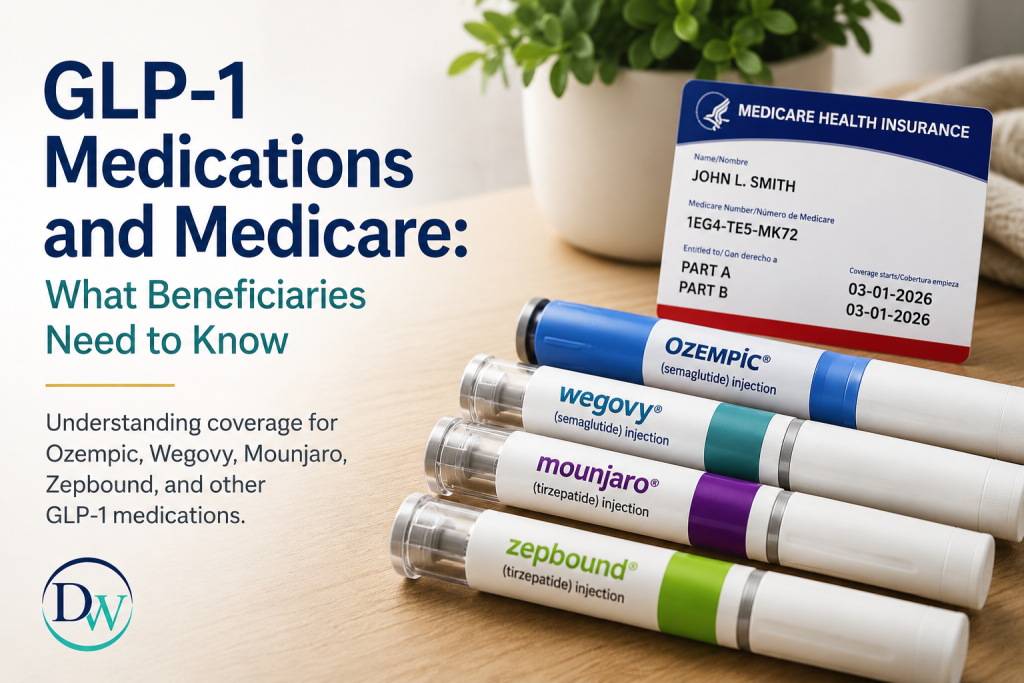
GLP-1 Medications and Medicare
What Beneficiaries Need to Know
Understanding Coverage for Ozempic, Wegovy, Mounjaro, Zepbound, and Other GLP-1 Medications.
Many people who have successfully managed their diabetes or weight with a GLP-1 medication worry that turning 65 and enrolling in Medicare could change their access to treatment.
Medications such as Ozempic (semaglutide), Wegovy (semaglutide), Mounjaro (tirzepatide), and Zepbound (tirzepatide) have helped millions improve blood sugar control, lose weight, and reduce the risk of serious health complications. Naturally, one of the most common questions people ask as they approach Medicare is:
"Will Medicare cover my GLP-1 medication?"
The answer depends on several factors, including why the medication has been prescribed, your Medicare prescription drug plan, and the specific medication itself. Understanding these differences can help you avoid unexpected costs and make more informed decisions when choosing your Medicare coverage.
What Are GLP-1 Medications?
GLP-1 medications (glucagon-like peptide-1 receptor agonists) work by helping regulate blood sugar, slowing stomach emptying, and increasing feelings of fullness. Some newer medications, such as tirzepatide, work on both the GLP-1 and GIP receptors to produce similar effects.
Some of the most commonly prescribed medications include:
• Ozempic (semaglutide) – FDA-approved to treat type 2 diabetes.
• Wegovy (semaglutide) – FDA-approved for chronic weight management and to reduce cardiovascular risk in certain adults with obesity or overweight.
• Mounjaro (tirzepatide) – FDA-approved to treat type 2 diabetes.
• Zepbound (tirzepatide) – FDA-approved for chronic weight management and certain adults with obstructive sleep apnea related to obesity.
Although some of these medications contain the same active ingredient, they are approved for different medical conditions. That distinction is important because it can directly affect Medicare coverage.
Does Medicare Cover GLP-1 Medications?
Sometimes, but not always.
Whether Medicare covers a GLP-1 medication depends on several factors, including:
• The medical condition being treated
• The specific medication prescribed
• Your Medicare Part D prescription drug plan
• Whether the medication is included on your plan's formulary
• Any prior authorization, step therapy, or quantity limit requirements
The better question isn't whether Medicare covers GLP-1 medications. It's whether your specific Medicare drug plan covers your specific medication for your medical condition.
Coverage for Type 2 Diabetes
If you have type 2 diabetes, many Medicare Part D plans cover medications such as Ozempic, Mounjaro, and Rybelsus (oral semaglutide).
However, coverage doesn't necessarily mean you'll pay the same amount under every plan.
Even when two Medicare drug plans cover the same medication, they may differ significantly in:
• Your deductible
• Copayments or coinsurance
• Preferred pharmacy networks
• Prior authorization requirements
• Step therapy requirements
That's why it's important to compare plans based on the medications you actually take - not simply the monthly premium.
Does the $35 Medicare Insulin Cap Apply to GLP-1 Medications?
Although some GLP-1 medications are prescribed to treat type 2 diabetes, they are not insulin. Medicare's $35 monthly cap applies only to covered insulin products under Medicare Part B or Part D.
Instead, your cost for a GLP-1 medication depends on factors such as:
• Whether your Part D plan covers the medication
• The reason it has been prescribed
• Your plan's formulary
• Prior authorization or other coverage requirements
This distinction is important. Two people with type 2 diabetes may both have Medicare, yet one may pay no more than $35 per month for insulin, while another taking a GLP-1 medication may have very different out-of-pocket costs depending on their Medicare drug plan.
What If a GLP-1 Medication Is Prescribed for Weight Management?
Historically, Medicare has generally not covered medications prescribed solely for weight loss.
However, Medicare coverage for GLP-1 medications continues to evolve as the FDA approves additional medical uses for these drugs. Today, some GLP-1 medications may qualify for Medicare coverage when prescribed for FDA-approved indications beyond weight management, such as certain cardiovascular conditions.
Because FDA approvals, Medicare guidance, and Part D formularies continue to change, it's important to review your prescription drug coverage each year during Medicare's Annual Enrollment Period.
What If My Medication Isn't Covered?
Learning that your Medicare drug plan doesn't cover your medication, or that your out-of-pocket costs are much higher than expected, can be discouraging. Fortunately, a coverage denial doesn't always mean you've reached the end of the road.
Depending on your situation, you may have several options.
- Talk with your prescribing provider. Your physician may determine that another GLP-1 medication on your plan's formulary is an appropriate alternative. In some cases, switching to a different medication can significantly reduce your out-of-pocket costs while still meeting your treatment goals.
- Request a formulary exception. If your provider believes that the non-covered medication is medically necessary and that covered alternatives are not appropriate for you, they can request a formulary exception from your Medicare Part D plan. Approval isn't guaranteed, but it may be an option depending on your medical history and the plan's coverage policies.
- Review your plan's coverage requirements. Some medications require prior authorization, step therapy, or quantity limits before they'll be covered. Understanding these requirements, and working with your provider to satisfy them, may allow coverage without changing medications.
- Compare Part D plans during the Annual Enrollment Period. Medicare Part D prescription drug plans update their formularies every year. If you expect to remain on a GLP-1 medication, it's worth reviewing your options each fall. A different Part D plan may provide more favorable coverage for your specific medication, pharmacy, and anticipated prescription costs.
- Explore financial assistance, when available. While most manufacturer savings cards can't be used with Medicare, some manufacturers and charitable foundations offer patient assistance programs for eligible individuals. Eligibility varies by program and income.
The right solution depends on why you're taking the medication, your overall health, and your Medicare coverage. Before making any changes to your treatment, talk with your healthcare provider and review your Medicare prescription drug options carefully.
A New Option: The Medicare GLP-1 Bridge Program
Starting July 1, 2026, The Centers for Medicare & Medicaid Services (CMS) launched the Medicare GLP-1 Bridge Program. The Bridge program is a temporary nationwide demonstration program that expands access to certain GLP-1 medications for eligible Medicare beneficiaries whose medications are not otherwise covered through their Medicare Part D plan.
The Bridge program helps eligible beneficiaries pay for certain GLP-1 weight loss medicines. CMS maintains the current list of covered medications, eligibility requirements, and frequently asked questions on its website.
Costs for these drugs under the temporary program are $50 per month, no matter your income level. This $50 payment doesn’t count toward your Medicare drug plan deductible or yearly out-of-pocket limit. These drugs aren’t eligible for the Medicare Prescription Payment Plan.
The program is scheduled to run through December 31, 2027.
Unlike traditional Medicare prescription drug coverage, the Bridge Program operates outside of the Medicare Part D benefit. CMS administers the program directly, using a centralized system to process prior authorizations, adjudicate claims, and reimburse participating pharmacies.
Because eligibility requirements and covered medications may change, we recommend reviewing the official CMS Medicare GLP-1 Bridge FAQs before making decisions.
You can also read more in our article, Understanding the GLP-1 Bridge.
Choosing a Medicare Drug Plan: Look Beyond the Premium
When comparing Medicare Part D plans, many people naturally focus on the monthly premium. While the monthly premium is certainly important, it's only one piece of the puzzle.
A plan with a lower monthly premium may actually cost you more if it doesn't cover your medications favorably.
When comparing plans, consider:
- Whether your medications are covered
- Your estimated annual prescription costs
- Pharmacy networks
- Prior authorization requirements
- Coverage restrictions
- Your total expected out-of-pocket costs, not just the monthly premium.
When comparing plans, it's also important to verify that your preferred pharmacy participates in the plan's preferred network, as this alone can significantly affect what you pay.
The best Medicare drug plan isn't necessarily the least expensive one. It's the plan that best fits your healthcare needs.
The Bottom Line
GLP-1 medications have become an important treatment option for many people living with diabetes, obesity, and certain cardiovascular conditions.
At the same time, Medicare coverage for these medications has become increasingly complex as FDA approvals and Medicare policies continue to evolve.
If you're approaching Medicare, or reviewing your current coverage, it's worth taking the time to understand how your prescription drug plan covers the medications you rely on today and whether another plan may better meet your needs in the future.
Making the right Medicare decision isn't simply about choosing a plan with the lowest premium. It's about selecting coverage that supports your health, your prescriptions, and your financial goals.
Need Help Understanding Your Medicare Options?
Every person's situation is different. The medications you take, your healthcare needs, your budget, where you fill your prescriptions, and your future plans all play an important role when choosing Medicare coverage.
If you have questions about Medicare prescription drug coverage, GLP-1 medications, Medicare Advantage, Medicare Supplement insurance, or simply aren't sure where to begin, we’re happy to help you understand your options so you can make an informed decision with confidence.
Schedule a complimentary Medicare consultation.